
Johns Hopkins University (JHU) continues to pad its space community résumé with their interactive map, “The map of the observable Universe”,
 that takes viewers on a 13.7-billion-year-old tour of the cosmos from the present to the moments after the Big Bang.
 While JHU is responsible for creating the site, additional contributions were made by NASA, the European Space Agency,
 the National Science Foundation, and the Sloan Foundation.
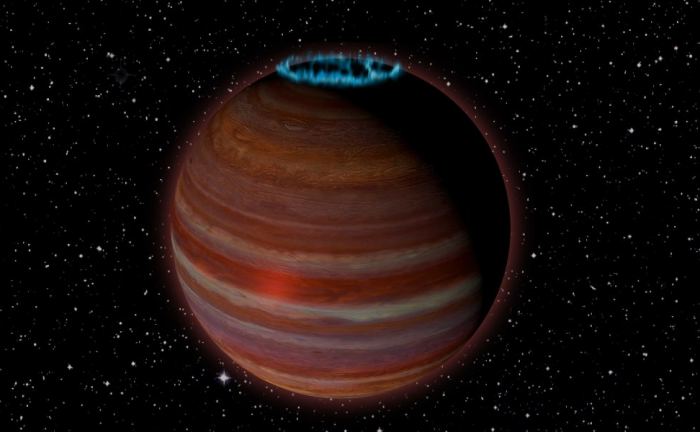
Artist's conception of SIMP J01365663+0933473, an object with 12.7 times the mass of Jupiter,
 but a magnetic field 200 times more powerful than Jupiter's. This object is 20 light-years from Earth.
 Credit: Caltech/Chuck Carter; NRAO/AUI/NSF
Some times planets just head off into the mysterious Universe all on their own,
without a star to orbit. How and why do planets go rogue like this?

Sign up to my weekly email newsletter:

Support us at:Support us at:

More stories at

Universetoday's Twitter

Like us on Facebook:

Instagram -

 📩 CONTACT FRASER
Contact Fraser via E-Mail

Karla Thompson - @karlaii

Chad Weber -

Chloe Cain - Instagram: @chloegwen2001
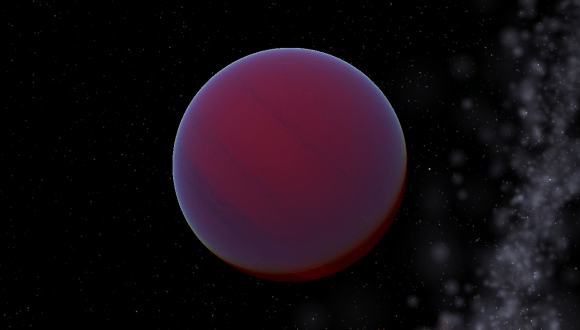
An artist’s conception of a T-type brown dwarf.
Credit: Wikipedia Commons/Tyrogthekreeper
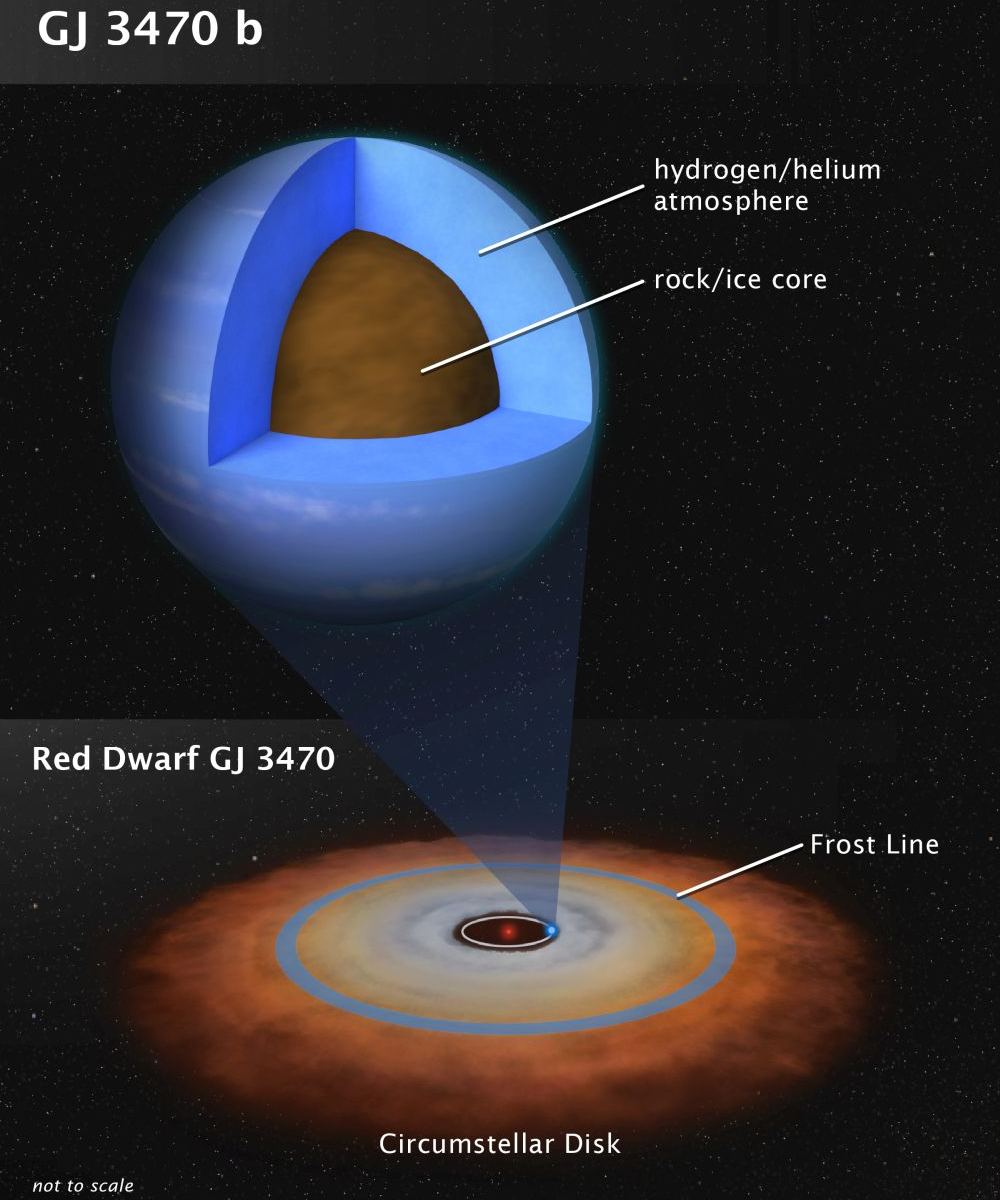
This artist’s illustration shows the theoretical internal structure of the exoplanet GJ 3470 b.
It is unlike any planet found in the Solar System. Weighing in at 12.6 Earth masses the planet
is more massive than Earth but less massive than Neptune. Unlike Neptune, which is 3 billion miles from the Sun,
 GJ 3470 b may have formed very close to its red dwarf star as a dry, rocky object.
 It then gravitationally pulled in hydrogen and helium gas from a circumstellar disk to build up a thick atmosphere.
 The disk dissipated many billions of years ago, and the planet stopped growing.
 The bottom illustration shows the disk as the system may have looked long ago.
 Observation by NASA’s Hubble and Spitzer space telescopes have chemically analyzed
 the composition of GJ 3470 b’s very clear and deep atmosphere, yielding clues to the planet’s origin.
 Many planets of this mass exist in our galaxy.
 Image Credit: NASA, ESA, and L. Hustak (STScI)
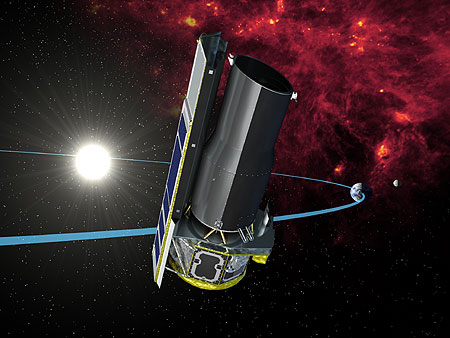
The Spitzer Space Telescope is the last of four telescopes in NASA’s Great Observatories Program.
 It observes in the infrared. It’s mission will be over in January, 2020.
 Credit: NASA
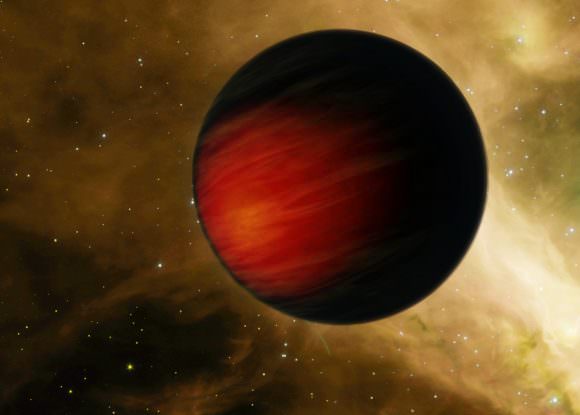
Artist’s concept of Jupiter-sized exoplanet that orbits relatively close to its star (aka. a “hot Jupiter”).
 Credit: NASA/JPL-Caltech)